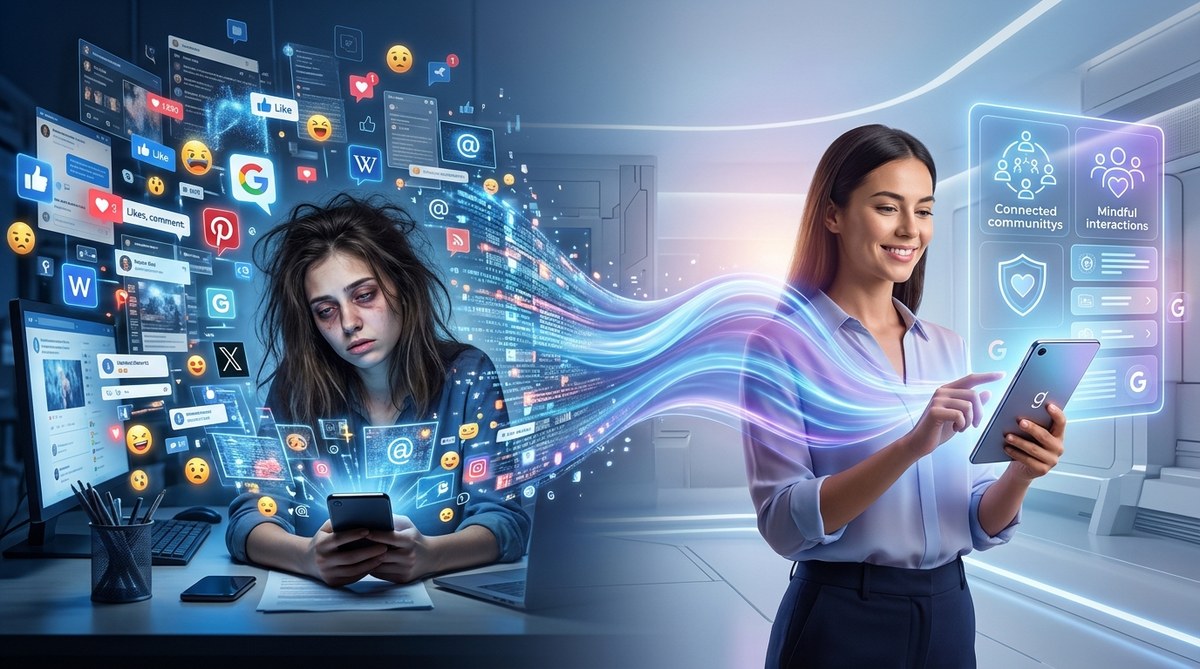
The endless scroll used to feel like a reward. Now it feels like a chore. You open an app, see a wall of promoted posts, AI-generated slop, and notifications that demand attention but offer little value in return. That sinking feeling has a name: user fatigue. And in 2026, it is the single most powerful force pushing social media platforms to reinvent themselves. For digital marketing strategists and product managers, understanding this shift is not optional. It is the key to staying relevant.
User fatigue in 2026 is forcing social platforms to prioritize quality over quantity, authenticity over polish, and community over broadcast. Marketers must adapt by shifting from high-volume publishing to value-driven content, embracing niche communities, and using data to measure real connection instead of vanity metrics. Those who ignore this trend will see engagement drop and audiences disappear.
Why 2026 Is the Year of the Great Reset
People are not quitting social media entirely. They are quitting the noise. The term “algorithmic burnout” has entered everyday conversation. Users are tired of feeds that feel like a casino slot machine, pulling them from a friend’s baby photo straight into an argument about politics, then into a product ad that seems to know too much.
The numbers back this up. A 2026 survey from the Pew Research Center found that 62% of U.S. adults say they have taken a break from social media in the past year because it felt overwhelming. That is a 15% jump from 2023. Platforms are feeling the pressure. Daily active time on major networks has flattened or dropped for the first time in a decade.
This is not a temporary dip. It is a structural shift. The old playbook of “more posts, more often, more targeted” is breaking down. What is rising to replace it? Smarter, quieter, more human experiences.
What User Fatigue Actually Looks Like
Before we talk about solutions, let us get specific. User fatigue shows up in three distinct patterns that every marketer should recognize.
- Passive disengagement: Users still open the app but stop interacting. They scroll without liking, sharing, or commenting. They become ghosts.
- Active curation: People unfollow aggressively. They mute brands. They join private groups and leave public feeds behind. They build small, controlled spaces.
- Platform switching: Users move to smaller, niche networks where they feel less pressure. Apps focused on close friends, audio conversations, or specific hobbies are growing fast.
Each of these patterns tells you something. Passive disengagement means your content is visible but not valuable. Active curation means your audience is filtering you out. Platform switching means they have found something better.
How Platforms Are Responding (And What It Means for You)
Social media companies are not blind to this trend. In 2026, the biggest names in the space are rolling out changes that directly address user fatigue. Here is what is happening and how it affects your strategy.
The Shift to Intent-Based Feeds
Algorithmic feeds that prioritize “engagement at any cost” are being phased out. Instead, platforms are testing feeds that ask users what they want to see. Instagram now lets you choose between a “Friends” feed, a “Topics” feed, and a “Discover” feed. Twitter (now X) has introduced a “Chronological by Default” toggle that actually stays on.
This means your content has to earn its place in a specific lane. Generic posts that try to appeal to everyone will get filtered out. Posts that serve a clear purpose, like educating, entertaining a specific interest, or connecting a community, will perform better.
Algorithm Transparency Is Becoming a Selling Point
Users are demanding to know why they see what they see. In 2026, platforms are starting to publish simplified explanations of their ranking signals. TikTok already shows a “Why this video” button on every post. YouTube lets you see which signals pushed a video into your feed.
For marketers, this is a wake-up call. If you do not understand how the algorithm works on each platform, you are flying blind. Take time to learn the rules of each network. A strategy that works on LinkedIn will fail on TikTok because the signals are different.
Niche Communities Are the New Homepage
The biggest growth in 2026 is happening in micro-communities. Subreddits, Discord servers, WhatsApp groups, and dedicated forum apps are seeing record engagement. Users are trading broad feeds for curated spaces where they know the people and the norms.
This is where your brand needs to show up. Not as a loudspeaker, but as a participant. Joining a niche community means listening first, contributing value second, and promoting only when it feels natural.
A Practical Framework for Fighting Fatigue
You cannot control how platforms change their algorithms. But you can control how your brand shows up. Here is a three-step process to align your strategy with the 2026 reality of user fatigue.
-
Audit your content for friction. Look at every post you published in the last 90 days. Ask yourself: Does this add value or just take attention? If a post exists only to fill a calendar slot, cut it. Replace it with something that answers a question, solves a problem, or creates a genuine moment of connection.
-
Map your audience to their preferred spaces. Stop trying to be everywhere. Use your analytics to find where your audience is most engaged. It might be a small subreddit, a private Facebook group, or a niche podcast community. Put your energy there instead of spreading it thin across five platforms.
-
Measure connection, not clicks. Vanity metrics like impressions and likes are losing their meaning. In 2026, the metrics that matter are shares to close friends, saves, repeat visits, and direct messages. These signals show that someone actually cares about what you posted.
“The brands winning in 2026 are the ones that treat social media like a conversation, not a broadcast. They reply to comments. They ask questions. They show up consistently in the same places. That reliability is what cuts through fatigue.” – Sarah Chen, Head of Community at a major social platform
Common Mistakes That Worsen User Fatigue
Even with good intentions, brands make mistakes that push audiences away. Here is a table of what to avoid and what to do instead.
| Mistake | Why It Hurts | Better Approach |
|---|---|---|
| Posting daily without a strategy | Clutters feeds and trains users to ignore you | Post less often, but with higher relevance |
| Using AI to mass-produce content | Feels generic and lacks human voice | Use AI for research and outlines, then write in your own tone |
| Chasing every trending audio or format | Makes your brand seem desperate and unfocused | Stick to formats that match your brand personality |
| Ignoring comments and DMs | Signals that you do not care about connection | Set aside 15 minutes daily to engage with responses |
| Running ads that interrupt the experience | Creates negative brand association | Invest in native content that feels like a natural post |
What Success Looks Like in a Fatigue-Free Strategy
Imagine a brand that posts three times a week instead of three times a day. Each post is thoughtful. One shares a customer story. One answers a common question. One invites the audience to share their own experience. Comments are replied to within hours. The brand is active in two niche communities, not ten.
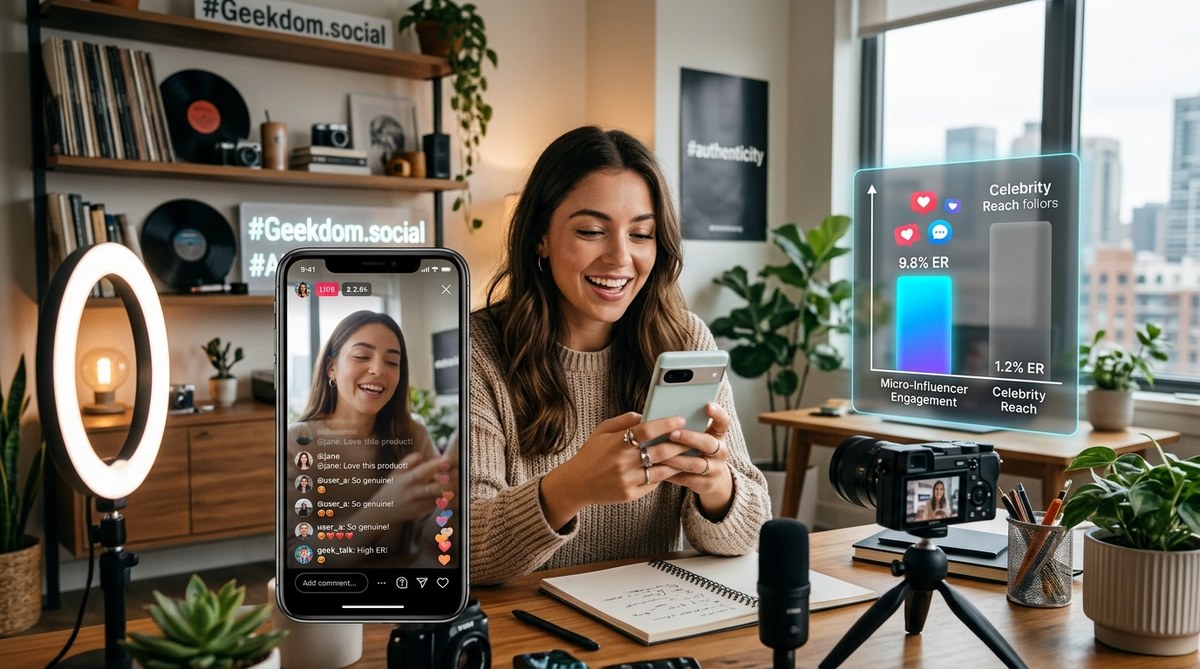
This brand does not have the highest follower count. But it has the highest engagement rate in its category. People tag their friends in the comments. They save posts to reference later. They send direct messages saying “this is exactly what I needed.”
That is the goal. Not reach. Relevance.
Where Social Media Innovation Is Heading Next
The wave of innovation driven by user fatigue is still in its early stages. Here is what is coming next and how to prepare.
- Decentralized platforms will grow. Networks built on open protocols like ActivityPub (used by Mastodon and Bluesky) give users more control over their feed. Brands that learn how to operate in these spaces early will have a first-mover advantage.
- Paid communities will become normal. Users are willing to pay for spaces that are free from ads and low-quality content. Subscription-based social apps and premium Discord servers are already proving this model works.
- Content will become more ephemeral. Stories, audio rooms, and disappearing posts feel less permanent and less stressful. They encourage real-time connection instead of polished performance.
- Social search will replace social feeds. More users are typing queries directly into TikTok or Reddit instead of Google. Optimizing your content for discoverability within these platforms is becoming as important as traditional SEO.
For a deeper look at how platforms are changing, read our guide on how social media algorithms are changing user interaction in 2026. It covers the technical shifts behind the trends we have discussed here.
Building a Strategy That Lasts Beyond the Fatigue Cycle
User fatigue is not a problem to solve once. It is a signal to pay attention to. When your audience feels tired, it is because you have asked too much of them without giving enough back. The solution is not to shout louder. It is to speak more clearly.
Start by picking one platform and one community. Spend a month listening before you post. Learn what your audience actually wants. Then create content that fits that need, not your content calendar. Measure success by the quality of the responses you get, not the quantity of views.
The platforms will keep changing. The algorithms will keep updating. But the fundamental truth of 2026 is simple: people want to feel seen, not sold to. If you can make them feel that way, you will win their attention without needing to fight for it.