In the rush to post three times a day, chase every trend, and stitch together the next viral clip, many social media managers feel like they are running a treadmill that never stops. The numbers look good on paper, but the comments feel hollow. Engagement rates drop. Audiences scroll past without pausing. You know the feeling. What if the smartest move in 2026 is to do the opposite of what everyone else is doing? What if you slowed down, went deeper, and treated your content like a cozy fireplace on a rainy Sunday?
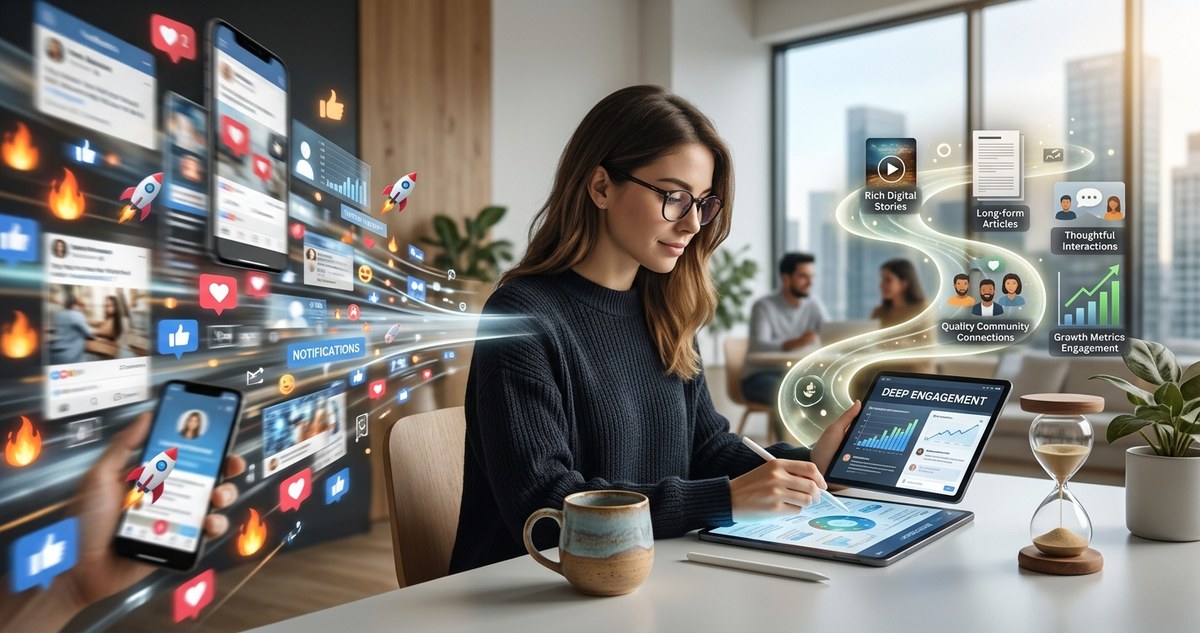
A Slow TV strategy for social media in 2026 is your antidote to content fatigue. By shifting from high-frequency, reactive posts to long-form, calming, and immersive content, you build a loyal audience that values depth over speed. This approach reduces burnout for your team, increases watch time, and fosters genuine community connection in a noisy digital landscape.
Why the Fast Lane Is Burning Out Your Audience
Social media in 2026 is louder than ever. Algorithms reward volume, so brands keep pumping out content. The result is a feed full of jump cuts, loud music, and urgent calls to action. After a few minutes of scrolling, most people feel exhausted, not inspired. This is where the opportunity lies.
The Slow TV strategy borrows its name from the Norwegian broadcasting phenomenon that aired hours of uninterrupted footage, like a train ride through the mountains or a ship sailing a fjord. Viewers watched, relaxed, and stayed. They did not need a payoff every three seconds. They just needed a reason to stay present.
For your brand, this means creating content that invites people to breathe. Instead of a 15-second Reel, you might produce a 10-minute loop of a craftsman building a chair. Instead of a frantic product demo, you share a quiet walk through your office garden. This is not about being boring. It is about being a refuge.
The Three Pillars of a Slow TV Social Media Strategy
To apply this to your 2026 content calendar, you need a framework. Think of these three pillars as your foundation.
1. Ambient Content That Rewards Patience
Ambient content is designed to be watched without demanding full attention. It works as background for studying, cooking, or winding down. Think of a live stream of a bakery oven, a camera fixed on a city skyline at dusk, or a looping video of a fish tank.
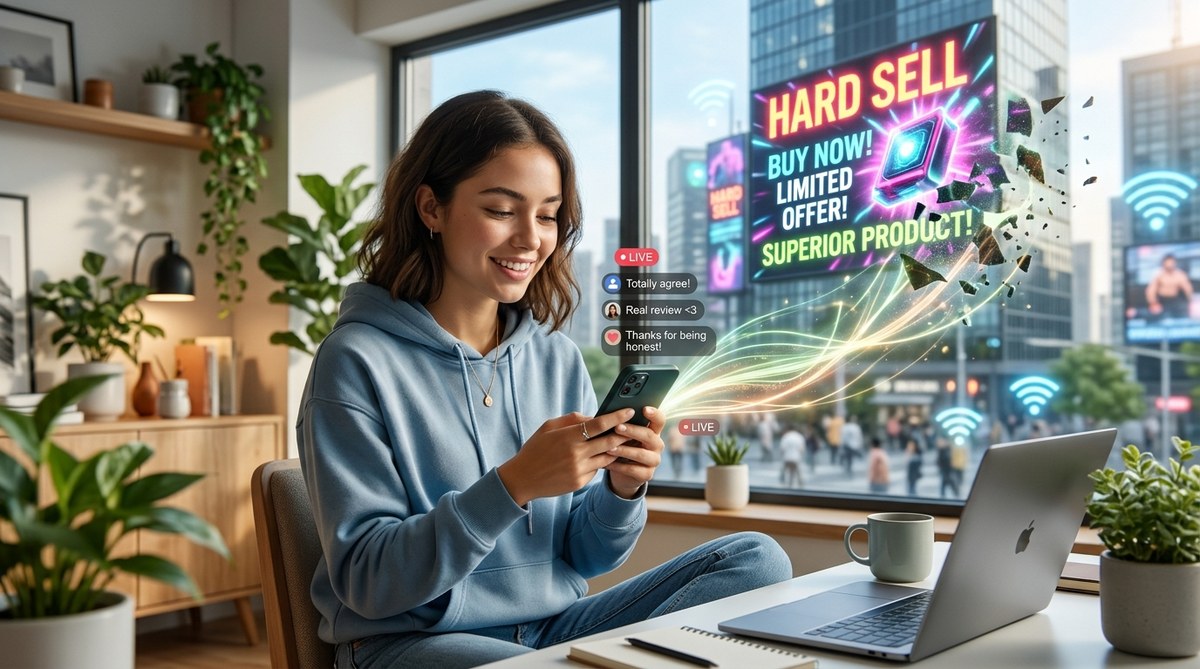
This type of content keeps your brand in the room longer. A viewer might leave your 30-minute stream running while they fold laundry. That is 30 minutes of brand presence without a single hard sell.
2. Deep Narrative Threads
Instead of one-off posts, create a story that unfolds over weeks. A bakery could post a daily one-minute clip of the same sourdough starter being fed. Over 30 days, the audience watches it grow. They start commenting, asking questions, and looking forward to the next update. This turns passive viewers into invested followers.
3. Intentional Production Minimalism
You do not need a cinema camera. In fact, polished production can kill the Slow TV vibe. Grainy, warm, or slightly imperfect footage feels more honest. A fixed tripod shot of a potter at a wheel, with natural light and no music, often performs better than a highly edited version. The audience trusts the realness.
How to Build Your First Slow TV Content Pillar
Ready to try it? Here is a practical process you can start this week.
-
Identify one calm process in your business. It could be packaging orders, brewing coffee, sketching designs, or assembling products. Choose something visual that has natural rhythm and repetition.
-
Set up a fixed camera. Use a smartphone on a tripod. Frame the shot wide enough to show the whole action. Do not zoom. Do not pan. Let the subject fill the frame naturally.
-
Record for at least 20 minutes. Do not worry about mistakes. The real magic of Slow TV is that it includes the unedited moments: the pause, the reset, the quiet hum of the room.
-
Edit only to remove dead air. Keep the natural audio. Add a subtle title card at the start and end. Do not add background music. Let the sounds of the space carry the experience.
-
Publish to a platform that supports long video. YouTube, Facebook, or a dedicated section on your website work well. For TikTok and Instagram Reels, post a 60-second segment and direct viewers to the full version in your bio or a link.
-
Engage in the comments slowly. Do not reply with sales pitches. Ask viewers what they noticed. Share small details about the process. Build a conversation around the craft, not the product.
Techniques vs. Mistakes in Slow TV Content
Here is a table to help you separate effective methods from common pitfalls.
| Technique | Mistake |
|---|---|
| Single fixed camera angle | Jump cuts and rapid scene changes |
| Natural ambient audio | Loud background music or voiceover |
| Uninterrupted real-time action | Time-lapses that skip the process |
| Minimal branding (logo at end) | Watermark or logo overlays throughout |
| Encouraging comments about the craft | Asking for likes or shares directly |
| Publishing on a schedule (e.g., every Friday) | Posting randomly without consistency |
Who Is Doing This Well in 2026
You do not need to look far for inspiration. Small brands are winning with this approach.
A ceramic studio in Portland streams its kiln firings every Saturday morning. The audience watches the glow change for hours. The chat is full of people asking about glaze temperatures and firing schedules. The studio sells out its monthly releases within hours, not because of ads, but because the community feels connected to the making.
A bookshop in Austin films a 10-minute “shelf talk” every Wednesday. The camera slowly moves down an aisle while the owner talks about one book. The video is one take, no cuts. Subscribers treat it like a weekly ritual. The shop reports that engagement on these posts is three times higher than their standard promotional graphics.
“Slow content does not scale in the traditional sense, but it builds a moat around your brand. Competitors can copy your product, but they cannot copy the trust you build by showing up consistently without asking for anything in return.” – Jamie Liu, community strategist and author of “The Long View”
Common Objections (And Why They Miss the Point)
Some social media managers worry that Slow TV will hurt their metrics. Let us address those fears directly.
“My audience has a short attention span.” Actually, watch time data from 2025 shows that long-form, low-stimulation videos on YouTube and Facebook have higher completion rates than short, high-energy clips. People are craving calm. They just need permission to slow down.
“I need to post every day to stay relevant.” You can still post daily. The difference is that one of your weekly posts is a Slow TV piece. The other posts can be standard content. The Slow TV piece acts as an anchor that brings people back.
“This only works for lifestyle brands.” Not true. A SaaS company can show a developer writing code for an hour with soft lo-fi music. A logistics company can film a package traveling through a sorting facility. The key is to find the quiet beauty in your own operation.
Measuring Success When You Stop Chasing Vanity
When you adopt a Slow TV strategy social media 2026, you must change what you measure. Do not look at likes or shares as primary signals. Look at these instead.
- Average watch time. Are people staying for more than 50% of the video?
- Return viewers. Are the same people coming back week after week?
- Comment depth. Are comments longer than five words? Do they ask questions?
- Direct messages. Are people sending you personal notes about how the content made them feel?
- Community actions. Are viewers tagging friends, saving the video, or requesting more?
These metrics indicate genuine connection. They are harder to game, and they matter more.
Why This Strategy Fits the 2026 Digital Mood
The cultural shift toward digital minimalism is real. People are taking social media detoxes, joining smaller communities, and paying for ad-free experiences. The “slow movement” has already touched food, travel, and fashion. Now it is touching content.
By offering a calm space, you position your brand as a thoughtful leader. You signal that you respect your audience’s time and mental energy. In a landscape full of noise, that signal is incredibly valuable.
Your First Step Toward Slower Content
You do not need to overhaul your entire strategy. Pick one day next week. Record 15 minutes of something your team does with care. Post it raw. Then listen to what happens.
The results may surprise you. A few hundred deeply engaged followers are worth more than ten thousand passive ones. As you build this practice, you will notice that your own stress levels drop too. Slowing down is not just good for your audience. It is good for you.
For more on building these deeper connections, read our guide on building thriving online communities in the digital age. If you want to understand the algorithms that reward this kind of content, check out mastering social media algorithms to boost your engagement. And if you are curious about the broader cultural shift, our piece on why social media detox is the new trend in 2026 offers more context.
Slow TV Is Not a Trend. It Is a Reset.
The Slow TV strategy for social media in 2026 is not about doing less work. It is about doing more meaningful work. It asks you to trust your audience with silence, with patience, and with process. In return, they will give you something that no algorithm can manufacture: their attention, freely given.
So try it. Set up the camera. Let the kettle boil. Let the wood burn. Let the dough rise. And see what happens when you stop performing and start being present.