You open your favorite social app to check the news. Within seconds, you see a post from a friend you haven’t talked to in years, a video from a creator you never followed, and a sponsored ad for a product you mentioned out loud yesterday. Coincidence? Maybe. But in 2026, the line between organic content and platform manipulation has never been blurrier.
The systems that decide what you see are no longer simple popularity contests. They are complex, opaque machines. Some are biased by design. Others are actively gamed by bad actors. This is the reality of platform manipulation in 2026. It affects your news, your shopping decisions, and even your political opinions. If you are a digital marketer trying to reach real people, or a consumer trying to find the truth, you need to understand how these systems work and where they break.
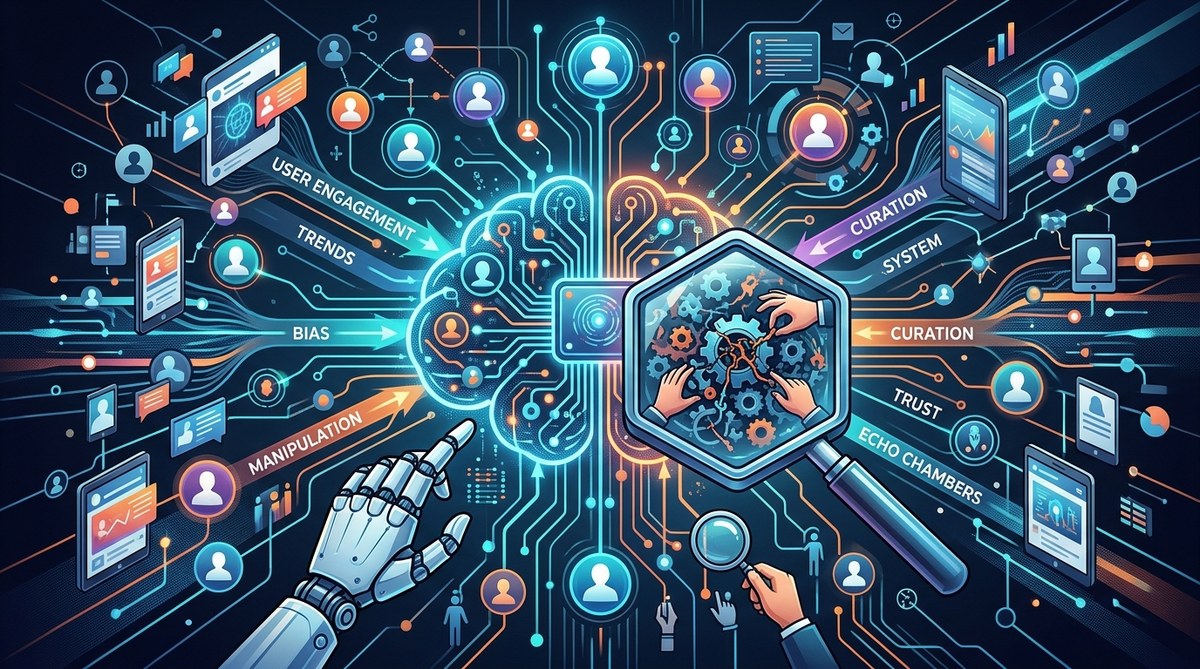
Platform manipulation in 2026 is a three-headed problem: algorithmic bias baked in by design, coordinated inauthentic behavior from networks of bots, and the rise of AI-generated content that floods feeds with synthetic engagement. You cannot fix the algorithm, but you can learn to spot the signs and reclaim control over your digital experience.
What Platform Manipulation Looks Like in 2026
Platform manipulation is any intentional effort to distort what an algorithm shows users. It is not new. Spam comments and like-farming have existed for years. But the methods have evolved. In 2026, the tools are smarter and harder to detect.
Here are the three most common forms you will encounter today:
- Algorithmic bias through design: Platforms optimize for time spent on site. This means controversial or emotional content often gets pushed higher. The algorithm does not care about accuracy. It cares about keeping your eyes on the screen.
- Coordinated inauthentic behavior (CIB): Networks of fake accounts, often powered by AI, work together to amplify a specific message. They share, like, and comment in patterns that trick the system into thinking a topic is trending.
- Synthetic media flooding: AI-generated images, videos, and text posts are now indistinguishable from human-created content. Bad actors use them to create fake news stories or fake product reviews at scale.
A recent study from early 2026 found that nearly 18 percent of all social media interactions on major platforms came from automated or semi-automated accounts. That is almost one in five likes, shares, or comments. The platforms are aware, but their detection systems are always playing catch-up.
How Algorithms Get Gamed: Techniques and Mistakes
Understanding the tactics used by manipulators helps you spot them. Below is a breakdown of common techniques and the mistakes that often give them away.
| Technique | How It Works | Red Flag for Users |
|---|---|---|
| Engagement baiting | Posts ask for likes, shares, or comments using emotional language or false dilemmas. | Comments are repetitive or use the same phrasing. |
| Bot network amplification | Hundreds of accounts share the same link or hashtag within minutes. | The topic spikes suddenly with no real-world event to explain it. |
| AI-generated review farms | Bots post five-star reviews for products or services on e-commerce and local business pages. | Reviews lack specific details and use generic praise. |
| Shadow ban evasion | Manipulators create multiple backup accounts to bypass platform restrictions. | The same account name appears with slight spelling variations. |
| Click farms for ad fraud | Real people in low-wage regions are paid to click on links or watch videos. | Engagement metrics are high, but conversion rates are near zero. |
Each of these techniques exploits a weakness in how platforms measure popularity. The algorithm sees high engagement and assumes the content is valuable. It then shows that content to more people, creating a feedback loop.
A Practical Process for Auditing Your Own Feed
You do not have to accept your feed at face value. You can audit it. This process takes about 15 minutes and will reveal a lot about what is being pushed at you and why.
- Open your main feed and scroll for two minutes. Do not interact. Just watch. Note the types of content that appear. Is it mostly from accounts you follow, or is it recommended content from strangers?
- Check the source of each recommended post. Click on the profile of any account you do not recognize. Look at their posting history. Do they post original content, or do they only reshare other people’s posts? Do they have a profile picture that looks like a stock photo?
- Look for patterns in the comments. Are the comments generic? Phrases like “Great post!” or “Totally agree!” repeated under multiple posts from the same account are a sign of bot activity.
- Use a third-party analytics tool. Services like Bot Sentinel or FollowerAudit (both updated for 2026) can scan an account and estimate how many of its followers are real.
- Mute or block suspicious accounts. Do not engage with them. Even a negative comment can signal to the algorithm that the content is engaging, which amplifies it further.
This audit gives you a snapshot of how much manipulation is affecting your personal feed. Doing it once a month helps you stay ahead of new tactics.
The Role of AI in Platform Manipulation 2026
Artificial intelligence is a double-edged sword. Platforms use AI to moderate content and detect spam. But manipulators also use AI to create content that is harder to flag.
Generative AI tools in 2026 can write long-form comments that sound like a real person. They can create profile pictures that look like real faces but do not belong to anyone. They can even mimic writing styles of specific users to make fake accounts more convincing.
“The arms race between detection and generation is intensifying. In 2025, we saw a 340 percent increase in AI-generated social media profiles. By 2026, that number has likely doubled again. The average user cannot tell the difference without help.” — Dr. Lena Sharma, researcher at the Digital Trust Institute
This is not just a problem for consumers. Digital marketers are also affected. If you are paying for ads or influencer partnerships, you might be buying fake impressions. A campaign that looks successful on paper might be reaching no real humans at all.
Why Algorithmic Transparency Matters Now More Than Ever
The push for algorithm transparency has been growing for years. In 2026, it is no longer a niche concern. Several US states have introduced bills that would require social media platforms to disclose how their ranking systems work. The European Union’s Digital Services Act already mandates some level of transparency for large platforms.
But transparency is not just a legal issue. It is a trust issue. When users do not understand why they see certain content, they become skeptical. They start to question everything. That skepticism is healthy, but it also makes it harder for legitimate creators and businesses to build trust.
If you want to learn more about how these systems affect your daily interactions, read our guide on how social media algorithms are changing user interaction in 2026. It covers the specific changes platforms have made this year and what they mean for your reach.
Building a Personal Strategy to Counter Manipulation
You cannot stop platform manipulation by yourself. But you can change how you interact with social media to reduce its impact on your life.
Here are five actions you can take starting today:
- Diversify your information sources. Do not rely on a single platform for news. Follow journalists directly on their own websites or via RSS feeds.
- Use platform features that prioritize recency. Many apps now let you switch to a chronological feed. Use it. It may not be as entertaining, but it is harder to manipulate.
- Engage deliberately. Before you like, share, or comment, ask yourself: “Would I share this if it had zero engagement?” If the answer is no, think twice.
- Support decentralized platforms. Networks built on open protocols, like Mastodon or Bluesky, give users more control over their feed algorithms. They are not immune to manipulation, but they are harder to game at scale.
- Educate your network. Share what you learn about platform manipulation. The more people know, the harder it is for bad actors to succeed.
For a deeper look at how these trends are shaping digital culture, check out our article on the future of online communities and the trends shaping digital culture. It explores where social platforms are heading and how communities are fighting back.
What Platforms Are Doing (And Not Doing) in 2026
Major platforms have made some moves. Most now label AI-generated content with a small icon or tag. Some have started showing users a “Why am I seeing this?” explanation on recommended posts. These are positive steps, but they are not enough.
The biggest gap is enforcement. Platforms detect only a fraction of coordinated inauthentic behavior. The incentives are misaligned. Manipulation drives engagement metrics, and engagement drives ad revenue. Platforms are caught between cleaning up their systems and keeping their numbers up.
Some smaller platforms are trying a different approach. They are building moderation tools directly into the user experience. For example, community-led flagging systems let trusted users mark suspicious content. This crowdsourced model is not perfect, but it often catches manipulation faster than automated systems.
If you are a digital marketer, understanding these dynamics is essential for your strategy. Our post on 5 social media tactics that will dominate 2026 offers actionable advice for reaching real audiences in a landscape full of noise.
Taking Back Your Digital Experience
Platform manipulation in 2026 is not going away. But you do not have to be a passive participant. Every time you scroll, you are voting with your attention. Every like and share is a signal that tells the algorithm what to show next.
Start treating your engagement like a currency. Spend it carefully. Audit your feed. Question the content that makes you angry or afraid. And remember that the goal of these platforms is not to inform you. It is to keep you engaged.
You have the power to break the loop. Use the tools available to you. Talk to your friends about what you find. And when you see something that feels off, trust your gut. In a world of synthetic content and hidden agendas, your skepticism is your best defense.