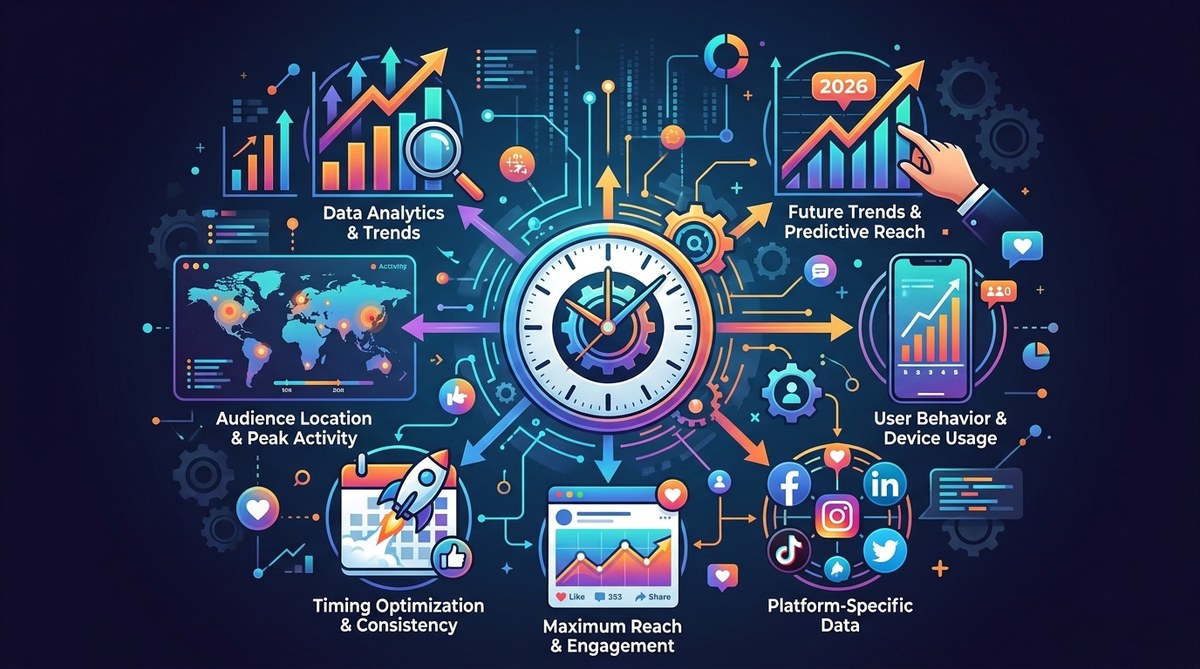
Social media moves fast. By the time a trend hits your feed, it’s often already peaking. But what if you could see it coming? Social media analytics give you that power. Instead of chasing trends after they blow up, you can catch them in their early stages. You can ride the wave instead of gasping for air. Let’s look at seven practical ways to spot viral trends using your analytics tools.
To spot viral trends before they explode, focus on early signals like engagement velocity, sentiment shifts, and cross-platform migration. Use social listening to monitor niche communities. Apply predictive AI tools to forecast trajectory. Avoid the trap of chasing stale numbers. One early win can transform your entire content strategy.
Why Social Media Analytics Are Your Early Warning System
Think of analytics as a radar for the social web. When a topic starts humming in small corners, your tools can detect the faint signal. Most people only notice the trend when it’s loud. By then, the competition is fierce and the audience is saturated. The early bird gets the engagement. Using analytics to spot viral trends gives you a head start of days or even weeks.
The key is to stop looking at raw numbers. Total likes or followers mean little for prediction. Instead, pay attention to rates of change, sentiment, and where the conversation lives. A small spike in a niche subreddit can predict a mainstream explosion weeks later. Let’s get into the tactics.
7 Ways to Spot Viral Trends Using Social Media Analytics
1. Monitor Engagement Velocity, Not Just Volume
Engagement velocity measures how fast content is getting shares, comments, and saves. A post with 50 shares in one hour has more predictive power than one with 500 shares over a week. You can set up alerts in tools like Sprout Social or Brandwatch for sudden acceleration. Watch for moments when share rate jumps above the baseline. That’s your flag.
For example, if you see a TikTok video about “silent walking” getting 1,000 shares per hour when it started at 10 per hour, you know something is happening. That’s the moment to create your own version. To get the most out of this, you need a solid understanding of how algorithms amplify signals. Check out our guide on mastering social media algorithms to sharpen your approach.
2. Track Share of Voice in Niche Communities
Share of voice shows how much your brand or a topic is mentioned compared to competitors. But when you’re spotting trends, look at share of voice in micro-communities. Small, passionate groups on Reddit, Discord, or dedicated Facebook groups often birth viral ideas. Use social listening tools to isolate mentions inside those corners.
Let’s say you manage a fitness brand. If you notice a sudden uptick in the word “zone 2 training” inside a running subreddit, and that term wasn’t common last month, you have an early signal. Jump on it by creating a short video or carousel. Social listening is a superpower here. Our article on how to master the art of social listening covers the exact tools and filters you need.
3. Analyze Hashtag Growth Patterns
Hashtags are still a goldmine for trend detection. Don’t just look at how many posts use a hashtag today. Look at the growth rate over the past 7 to 14 days. A hashtag that grew from 100 to 1,000 uses in three days is growing 10x. That’s a stronger signal than one that went from 10,000 to 11,000.
Tools like Trendsmap or RiteTag show you growth curves. Pay attention to the slope. If the curve is exponential, you’re early. Create content around that hashtag before it reaches the mainstream. This works especially well on Instagram and TikTok.
4. Use Sentiment Analysis to Spot Emotional Triggers
Viral content often carries intense emotion, either positive or negative. Sentiment analysis can tell you if the conversation around a topic is shifting from neutral to excited or angry. Emotional spikes predict sharing behavior. People share things that make them feel something.
Set up a sentiment filter in your analytics dashboard. If you see a topic with a sudden jump in positive sentiment (or outrage), that’s a trend candidate. For instance, the “de-influencing” trend started as a negative reaction to overconsumption. Sentiment analysis caught the frustration early. If you’d acted then, you could have been part of the first wave.
5. Identify Shape-Shifting Content Formats
Viral trends often change shape. A meme format appears on Reddit, then gets adapted to TikTok as a sound, then to Twitter as a screen grab. Your analytics can track these format shifts. Look at what types of media (video length, meme style, audio clip) are gaining traction across platforms.
Use a tool that aggregates content across platforms, like Buzzsumo or Meltwater. When you see a specific video length (e.g., 15 second clips) suddenly outperform others in your niche, that’s a format trend. Create your own version in that shape. This tactic works especially well when you’re trying to stand out on emerging platforms. See how new social media features are transforming user interaction to stay ahead.
6. Watch for Cross-Platform Migration
A trend doesn’t stay in one place. It jumps. A TikTok dance moves to Instagram Reels, then to YouTube Shorts. Analytics can help you spot migration patterns. If you see a topic gaining traction on a smaller platform like Pinterest or Tumblr, and then detect an uptick on Twitter, you know it’s about to break into the mainstream.
Set up cross-platform monitoring. When a keyword spikes on one network, check its presence on others. The gap between platforms is your window. Act fast. This is where understanding the culture of each platform matters. Our piece on the rise of decentralized social platforms gives you extra context on where new communities gather.
7. Leverage Predictive Analytics from AI Tools
In 2026, AI powered predictive analytics are more accessible than ever. Tools like Exploding Topics, Trendhub, or Crayon use machine learning to forecast trend trajectories. They analyze search volume, social mentions, and news coverage to predict future popularity. These tools aren’t perfect, but they give you a data backed starting point.
Use them to generate a list of potential trends each week. Then apply your own human judgment: does it fit your audience? Can you create authentic content around it? Predictive analytics take the guesswork out of trend spotting. They are a complement to your own intuition, not a replacement. For more on AI’s role in social growth, read how to leverage AI driven features to maximize social media growth.
Table: Techniques vs. Common Pitfalls
Here’s a handy reference for what to watch for and what to avoid:
| Technique | What to Look For | Mistake to Avoid |
|---|---|---|
| Engagement Velocity | Sharp increase in share rate per hour | Focusing only on total likes or views |
| Share of Voice in Niches | Mentions growing in small communities | Ignoring low volume because it seems small |
| Hashtag Growth Patterns | Exponential growth in usage count over 7 days | Waiting for a hashtag to reach millions |
| Sentiment Analysis | Emotional spikes (joy, anger, surprise) | Treating neutral topics as trend candidates |
| Format Shifts | New video length, meme template, audio clip | Creating content in the old format |
| Cross-Platform Migration | Topic appearing on a second platform | Acting only after it’s everywhere |
| Predictive AI Tools | Forecasted growth curve from ML models | Blindly trusting the prediction without human check |
The Power of Social Listening (Expert Advice)
“The best way to catch a trend early is to listen to the communities that create culture, not just the influencers. Analytics give you the data, but social listening gives you the story behind the spike. Combine both and you’ll never miss a wave again.”
– Emma Chen, Digital Strategist at TrendWatch
Social listening is the human layer on top of analytics. It helps you understand why something is gaining momentum. Is it because of a cultural moment? A celebrity mention? A new product launch? Knowing the context lets you tailor your content so it resonates, not just rides the trend.
If you want to build a community that naturally feeds you trend signals, check out our guide on how to build a thriving social media community from scratch. Your community will become your best early warning system.
Take Action Before the Trend Peaks
You now have seven data driven methods to spot viral trends before they explode. The key is consistency. Set up a weekly routine: run your analytics, check sentiment, scan niche forums, and look for cross-platform movement. Over time, you’ll develop an instinct for which signals matter.
Start with one technique this week. Maybe it’s monitoring engagement velocity. Or maybe you try predictive AI tools. Pick what fits your workflow and build from there. The difference between being a trend setter and a trend chaser is timing. Social media analytics give you that timing. Use them.
Remember, the goal isn’t to chase every micro trend. It’s to catch the ones that align with your brand and audience. Analyze, act, and then measure. That’s the cycle.
For more strategies on turning user generated content into trend fuel, read 7 proven ways to turn user generated content into your brand’s secret weapon. And if you want to future proof your approach, our article on 5 social media tactics that will dominate 2026 will keep you ahead.
Now go spot your next wave.