Here is the full article in a single code block.
“`
You are tired of posting content that gets no traction. You check the analytics and see low engagement, high bounce rates, and a growing silence. The algorithm is not punishing you. Your audience is just telling you something you keep missing.
Social media in 2026 is noisier than ever. AI generated posts flood every feed. Users have become experts at tuning out anything that does not feel personally relevant. The brands that win are not the ones with the loudest megaphone. They are the ones that listen first.
A listen-first strategy flips the old content formula on its head. Instead of planning three months of posts in a vacuum, you start by observing real conversations. You let your audience guide what you create. The result is content that lands because it answers questions people are actually asking.
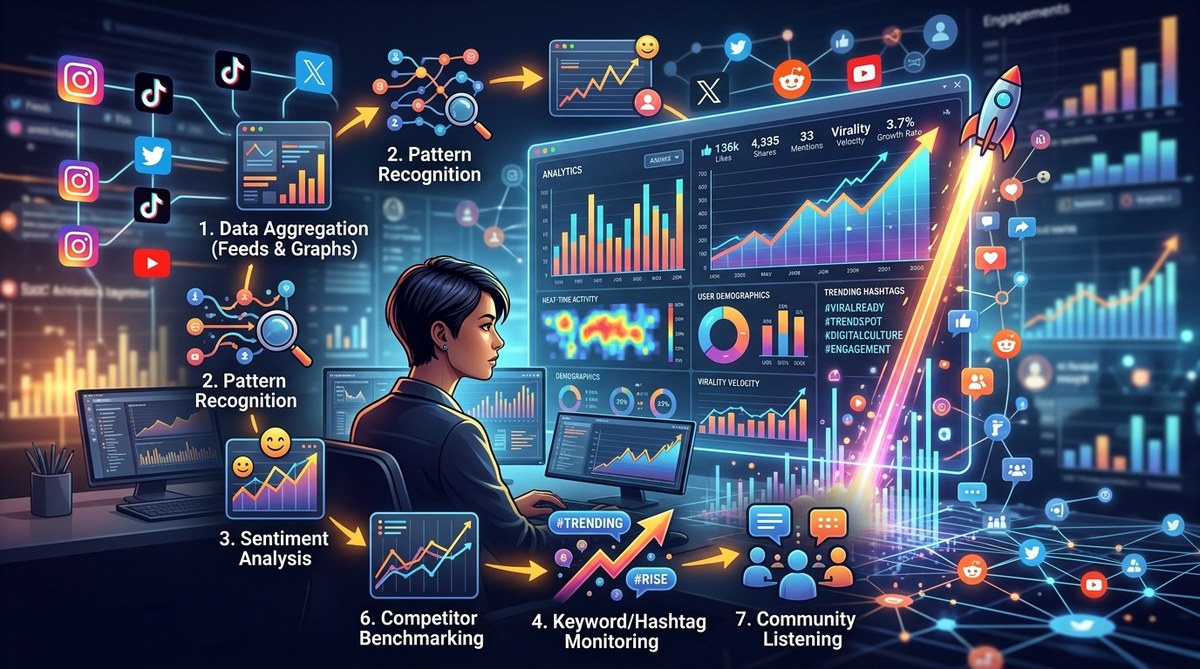
A listen-first social listening strategy for 2026 shifts your content planning from assumption to data. By monitoring keywords, sentiment, and competitor gaps, you create posts that speak to real audience needs. This approach reduces wasted effort, builds trust, and keeps your brand relevant in an AI saturated feed.
Why “Listen First” Matters More Than Ever in 2026
The social media landscape has changed. Algorithms now prioritize relevance over recency. Users scroll past generic advice because they have seen it a thousand times. If your content does not mirror what your audience is already discussing, it will disappear.
Think about the way people talk online today. They share frustrations, ask questions, and celebrate small wins. These micro moments are gold for content creators. A social listening strategy for 2026 helps you capture these signals before they fade.
Consider a brand selling productivity software. Without listening, they might push out generic tips like “manage your time better.” With listening, they discover a rising frustration: people are overwhelmed by notification overload. So they create content about “how to silence distractions without missing important messages.” That post gets shared because it solves a real pain.
Listening also protects your brand. In 2026, backlash can erupt in hours. Monitoring sentiment lets you catch a brewing crisis before it burns. You can respond with empathy instead of scrambling for damage control.
What Is a Listen-First Strategy?
Let us clarify what we mean. A listen-first strategy is not the same as social media monitoring. Monitoring counts mentions and tracks hashtags. Listening adds context. It asks: Why are people saying this? What do they feel? How can we help?
A true listen-first approach feeds directly into your content calendar. Every piece of content should answer a question or address a sentiment you discovered from listening. It works for any brand size. You do not need expensive software for a small community. You need a process.
Here is a simple breakdown of the difference:
| Approach | Focus | Output |
|---|---|---|
| Social media monitoring | Volume of mentions, basic metrics | Reports, alerting |
| Social listening | Context, emotion, intent | Content ideas, strategy shifts |
| Listen-first strategy | Audience needs + gaps in market | Content calendar, campaign themes |
The third column is where brands win in 2026. You move from tracking to creating.
The Core Techniques of Social Listening in 2026
To build a strong social listening strategy for 2026, you need to master four core techniques. Each feeds a different part of your content process.
- Sentiment analysis – This tells you how people feel about a topic. Are conversations around your industry optimistic, frustrated, or confused? You can use that emotion to choose the tone of your content.
- Trend tracking – Spot rising topics before they peak. A trend that grows 50% week over week is worth a blog post or a video now, not next month.
- Competitor analysis – See what works for your competitors and where they fall short. Look for comments like “I wish they would explain this better.” That is your content opportunity.
- Keyword and hashtag monitoring – Listen for the exact phrases your audience uses. Those phrases become your titles, captions, and search tags.
You can start with free tools. Use platform native search features, Google Trends, and a simple spreadsheet. As you grow, tools like Brandwatch, Sprout Social, or Talkwalker can scale your listening.
For a full breakdown of how to select the right tools and set up queries, check out our guide on how to master the art of social listening in 2026.
How to Build Your Listen-First Strategy in 5 Steps
Now let us get practical. Here is a numbered process you can implement this week.
-
Define your listening objectives – What do you want to learn? Examples: find content topics, spot customer pain points, track brand reputation. Write down three objectives.
-
Set up your listening queries – List the keywords, phrases, and hashtags your audience uses. Include competitor names, industry terms, and common misspellings. Start with 10 to 15 terms.
-
Collect and organize data daily – Spend 15 minutes each morning reviewing mentions, comments, and trend reports. Save the best insights in a shared document or tool.
-
Identify content opportunities – Each week, look for patterns. A question that appears repeatedly becomes a pillar post. A compliment about a competitor weakness becomes your positioning angle.
-
Create and measure – Produce content based on your findings. Track engagement, saves, and shares. Then ask: did this post perform better than the ones we guessed? If yes, double down.
This cycle works best when you repeat it weekly. Consistency beats volume.
Common Mistakes That Ruin a Listen-First Strategy
Even with the best intentions, people make errors that waste the effort. Here are three frequent mistakes and how to fix them.
| Mistake | Why It Hurts | The Fix |
|---|---|---|
| Listening but not acting | Data sits in a dashboard with no impact. | Block calendar time each week to turn insights into drafts. |
| Listening to the wrong channels | You miss where your actual audience talks. | Audit your audience demographics and focus on their preferred platforms. |
| Overweighting loud voices | A few angry users skew your direction. | Look for volume of sentiment, not just intensity. |
Avoid these pitfalls by staying curious and humble. The data is a guide, not a dictator.
“The best content I ever created came from a single Reddit comment where a user said ‘I wish someone would explain this to me like I am five.’ That became a video with 200,000 views. Listening is not passive. It is the most active research you can do.” – Maya R., Social Media Strategist at a mid size SaaS company, 2026
From Listening to Content Creation: What to Publish
Once you have listened, you need formats that honor the insight. Not every piece of content needs to be a long article. Match the format to the sentiment.
- For educational questions: write a listicle or short explainer video.
- For emotional pain points: share a relatable story or behind the scenes post.
- For competitor gaps: create a comparison infographic or honest review.
- For trending topics: post a timely opinion or reaction video.
A listen-first strategy also helps you build a thriving social media community from scratch in 2026. When people see you respond to their questions with content, they trust you more. They engage deeper. They become advocates.
If you are unsure which format to prioritize, look at your listening data. If your audience mostly watches video on YouTube, make tutorials. If they comment on LinkedIn articles, write thoughtful posts. Let the channel itself guide you.
You can also repurpose one listening insight into multiple formats. Take a common question, make a tweet, a short video, a blog post, and a carousel. This approach maximizes the value of each discovery. Read more about how to repurpose long-form content into social media gold in 2026 for a full workflow.
Start Listening Before You Post
The loudest brands are often the loneliest. They shout into a void because they never learned what the void actually needs. A listen-first strategy is not a one time campaign. It is a shift in how you think about content.
Every morning, before you type a caption or schedule a post, ask yourself: What did I hear today? That question will change your social media forever.
In 2026, the gap between average content and remarkable content is listening. The tools are accessible. The data is there. The only missing piece is the commitment to listen before you speak.
Try it for one week. Pick three keywords related to your brand. Spend 10 minutes each day reading what people say. Write down one insight per day. Then create one piece of content based on the strongest insight. Compare its performance to a post you would have made without listening.
You will see the difference immediately. And you will never go back.