Posting at the wrong time is like telling a great joke to an empty room. You put in the work, you craft the perfect caption, and then… silence. The algorithm punishes you. Your audience misses the post. And your engagement metrics take a hit.
But here is the good news. You do not need to guess anymore. In 2026, we have more data than ever on when people actually scroll, like, and share. The platforms have changed. User habits have shifted. And the old rules about posting at 9 AM on a Tuesday no longer apply across the board.
This guide breaks down the best posting times 2026 data reveals for each major platform. We will show you how to find your specific sweet spot using real analytics, not outdated advice.
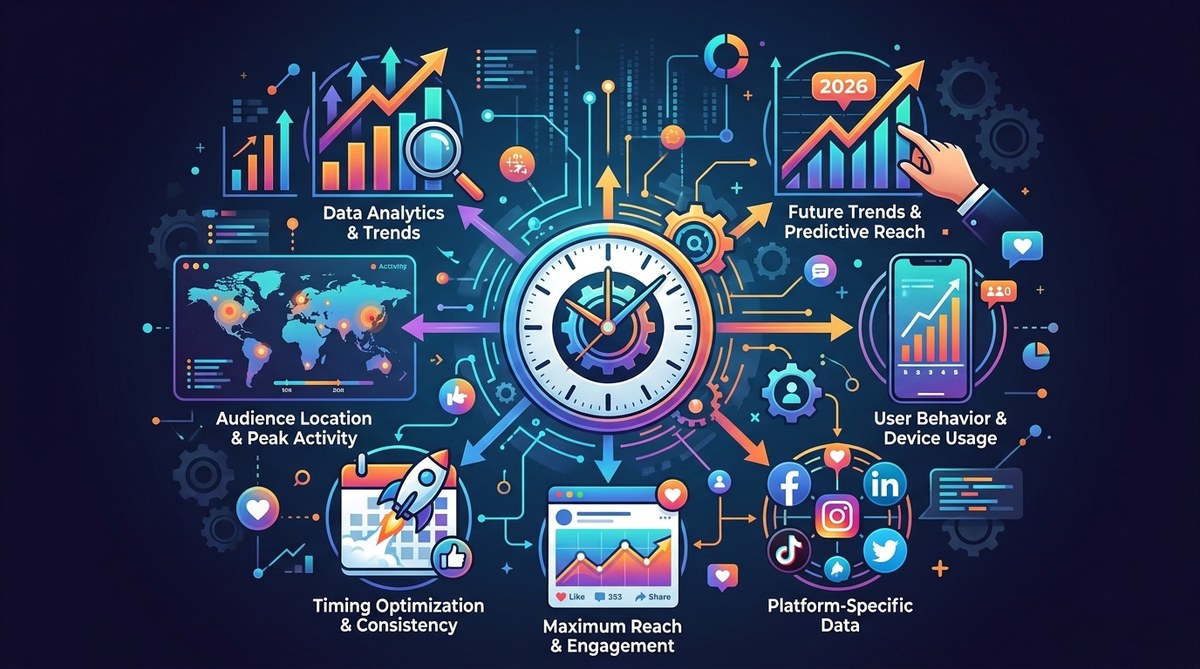
The best posting times 2026 data points to late morning (10 AM to 12 PM) and early evening (6 PM to 8 PM) as peak windows across most platforms. But generic windows only get you so far. The real gains come from analyzing your own audience’s behavior using platform analytics, testing different time slots, and aligning with your specific content type. TikTok favors late night. LinkedIn prefers work hours. Instagram leans into lunch breaks. Know your platform, know your people, and schedule accordingly.
Why Posting Time Still Matters in 2026
Algorithms have gotten smarter. But they still reward early engagement. When you post, the platform shows your content to a small test group. If those people interact quickly, the algorithm pushes your post to a wider audience.
Post when your audience is asleep? Your test group ignores you. The algorithm labels your content as low quality. And your reach flatlines.
This is not about tricking the system. It is about respecting your audience’s schedule. If they are online, they can engage. If they are not, your content waits in a queue that may never get served.
Understanding the best posting times 2026 requires looking at each platform individually. Let us break them down.
Platform-by-Platform Breakdown for 2026
Instagram has shifted hard toward video content and personalized feeds. The chronological timeline is long gone. But user activity still follows predictable patterns.
Best posting times for Instagram in 2026:
| Day of Week | Best Time Window | Second Best Window |
|---|---|---|
| Monday | 11 AM – 1 PM | 7 PM – 9 PM |
| Tuesday | 10 AM – 12 PM | 6 PM – 8 PM |
| Wednesday | 11 AM – 2 PM | 7 PM – 9 PM |
| Thursday | 12 PM – 2 PM | 6 PM – 8 PM |
| Friday | 10 AM – 12 PM | 5 PM – 7 PM |
| Saturday | 9 AM – 11 AM | 7 PM – 10 PM |
| Sunday | 10 AM – 12 PM | 6 PM – 9 PM |
The lunch break window is your strongest bet. People check Instagram while eating. They scroll during their midday pause. And they engage more when they are not rushing.
For Reels specifically, the late evening window (7 PM to 10 PM) performs better. Users watch short videos while winding down. They are more likely to share and save content during these relaxed hours.
TikTok
TikTok is a different beast. Its algorithm is less dependent on posting time than any other platform. But timing still affects your initial push.
Best posting times for TikTok in 2026:
The data shows two strong windows:
– Morning commute: 7 AM to 9 AM
– Late night scroll: 9 PM to 12 AM
TikTok users tend to binge late at night. They open the app before bed and get stuck in a loop. Posting between 9 PM and 11 PM gives your content a chance to catch that wave.
The morning window works well for educational or informative content. People want tips and tricks before their day starts. For entertainment and humor, aim for the late window.
LinkedIn remains a professional platform. Its peak hours mirror the workday.
Best posting times for LinkedIn in 2026:
- Tuesday through Thursday: 8 AM to 10 AM, and 12 PM to 1 PM
- Monday and Friday: 9 AM to 11 AM
LinkedIn users check the app before work, during lunch, and right after the workday ends. The sweet spot is Tuesday morning at 9 AM. Professionals are settled at their desks but not yet buried in tasks.
Weekends are weak for LinkedIn. Do not waste your best content on Saturday or Sunday.
Facebook still has a massive user base, but engagement patterns have shifted. Older demographics dominate the platform now.
Best posting times for Facebook in 2026:
- Weekdays: 9 AM to 11 AM, and 1 PM to 3 PM
- Weekends: 10 AM to 12 PM
Facebook users tend to check the app in the morning with coffee and again after lunch. The weekend window is stronger for lifestyle content, family posts, and local business updates.
X (formerly Twitter)
X is about real-time conversation. Timing matters more here than anywhere else.
Best posting times for X in 2026:
- Weekdays: 8 AM to 10 AM, and 5 PM to 7 PM
- Weekends: 9 AM to 11 AM
The morning window catches the news cycle. The evening window catches people decompressing after work. For breaking news or trending topics, post immediately. Do not wait for a scheduled slot.
How to Find Your Own Best Posting Times
Generic data gives you a starting point. But your audience is unique. Here is how to dial in your specific best posting times 2026.
1. Check Your Native Analytics
Every major platform offers insights. Look at these metrics:
- When your followers are online: Instagram and LinkedIn show this directly.
- Top performing posts by time: Sort your best posts by publish time.
- Engagement rate by hour: Calculate likes, comments, and shares divided by reach.
2. Run a Two-Week Test
Pick three time slots from the generic recommendations. Post at those times for two weeks. Track engagement for each slot. Cut the worst performer. Add a new time slot. Repeat until you find your peak.
3. Account for Time Zones
If your audience spans multiple time zones, you need a strategy. Here is a simple framework:
- National audience: Post at 10 AM Eastern Time. This catches the East Coast at peak and the West Coast mid-morning.
- Global audience: Post at 8 AM UTC. This covers Europe afternoon, Americas morning, and Asia evening.
- Local audience: Post when your local time hits the generic window.
4. Consider Content Type
Not all content performs best at the same time. Test different windows for:
- Educational posts
- Entertainment videos
- Promotional content
- User-generated content
- Behind-the-scenes stories
5. Use Scheduling Tools
Tools like Buffer, Hootsuite, and Later let you schedule posts for specific times. They also provide analytics to track performance by time slot. Use them to automate your testing.
Common Timing Mistakes to Avoid
Even with the best posting times 2026 data, people still make errors. Here are the most common ones.
| Mistake | Why It Hurts | Fix |
|---|---|---|
| Posting at the same time every day | Audience gets fatigued or misses you if their schedule shifts | Rotate between two or three windows |
| Ignoring holidays and events | Engagement drops during major holidays or events | Check a content calendar before scheduling |
| Using only generic advice | Your audience may not match the average | Test your own analytics |
| Posting during major news events | Your content gets buried | Pause or reschedule during breaking news |
| Forgetting about daylight saving time | Audience habits shift by an hour | Adjust your schedule twice a year |
How Algorithms Have Changed in 2026
The platforms have made big changes. Understanding these shifts helps you choose the best posting times 2026 more effectively.
Instagram now prioritizes saves and shares over likes. Content that gets saved performs better over time. Post when your audience has time to save your content, not just scroll past it.
TikTok tests every video with a small audience. If that test group engages, the video goes wider. Posting when your audience is active increases the chance of passing the test.
LinkedIn rewards early comments. The algorithm boosts posts that get comments within the first hour. Post when professionals have time to type a thoughtful response.
Facebook still favors content that sparks conversation. Posts that get comments and reactions perform best. Timing matters less than quality, but good timing amplifies good content.
A Practical Weekly Schedule
Here is a sample schedule based on the best posting times 2026 data. Adjust for your time zone and audience.
Monday:
– Instagram: 11 AM
– LinkedIn: 9 AM
– X: 8 AM
Tuesday:
– TikTok: 9 PM
– Facebook: 10 AM
– LinkedIn: 12 PM
Wednesday:
– Instagram: 12 PM
– X: 5 PM
– TikTok: 7 AM
Thursday:
– LinkedIn: 8 AM
– Facebook: 2 PM
– Instagram: 7 PM
Friday:
– TikTok: 10 PM
– X: 9 AM
– LinkedIn: 10 AM
Saturday:
– Instagram: 10 AM
– Facebook: 11 AM
Sunday:
– TikTok: 9 PM
– Instagram: 6 PM
This is a template, not a rule. Test it. Tweak it. Make it yours.
“The best time to post is when your audience is actually looking at their phone. Stop guessing. Start testing. The data is already in your analytics dashboard, waiting for you to use it.” – Social media strategist and community builder.
Understanding Platform-Specific Nuances
Each platform has quirks that affect the best posting times 2026.
Instagram Stories have a 24-hour lifespan. Post them during peak engagement windows. But also post them during lulls to catch people who check the app multiple times.
TikTok trends move fast. If a trend is hot, post immediately. Do not wait for your scheduled time. Speed beats timing when a trend is exploding.
LinkedIn carousels perform best in the morning. People want digestible content before their day gets busy.
Facebook Groups have their own peak times. Check the group analytics if you run a community. Group members often have different schedules than the general feed.
The Role of Automation and AI
AI tools now help predict the best posting times 2026 for your specific account. These tools analyze your past performance and suggest optimal windows.
But do not hand over full control. Use AI suggestions as a starting point. Then test manually. AI can miss context like holidays, personal events, or sudden shifts in audience behavior.
Some tools to consider:
- Later offers personalized best time recommendations based on your Instagram data.
- Buffer provides analytics on your top performing times.
- Hootsuite includes a best time feature for multiple platforms.
These tools save time. But they work best when combined with your own judgment.
How to Adapt for Niche Audiences
If you serve a specific niche, the best posting times 2026 may differ from the mainstream.
B2B audiences check LinkedIn during work hours. But they also check it late at night when researching solutions. Test a 9 PM LinkedIn post for B2B content.
Parent audiences are active early morning (before kids wake up) and late evening (after kids go to bed). The lunch window is weaker for them.
Student audiences are active late at night and on weekends. Posting at 11 PM on a Sunday works well for student-focused content.
Fitness audiences are active early morning (5 AM to 7 AM) and early evening (5 PM to 7 PM). Align with workout times.
Gaming audiences are active late at night and on weekends. Posting at midnight on Friday works for gaming content.
Tools to Track Your Progress
You cannot improve what you do not measure. Use these tools to track your posting time performance.
- Google Analytics: Track social traffic by hour.
- Platform Insights: Instagram, LinkedIn, and TikTok all show when your followers are active.
- Spreadsheet: Track every post with time, engagement, and reach. Look for patterns after 30 days.
Spend 15 minutes each week reviewing your data. Adjust your schedule based on what the numbers tell you.
Making the Best Posting Times 2026 Work for You
You now have the data. You know the windows. You understand the platforms.
But here is the truth. The best posting times 2026 will not save bad content. Timing amplifies quality. It does not replace it.
Focus on creating content that educates, entertains, or inspires. Then use timing to make sure people actually see it. That combination is what drives real growth.
Start with the generic windows we shared. Run your own tests. Check your analytics. Adjust as you learn. And remember, your audience is unique. What works for a tech startup in San Francisco may not work for a bakery in Nashville.
The best posting times 2026 are the ones that work for you. Find them. Use them. Watch your engagement grow.