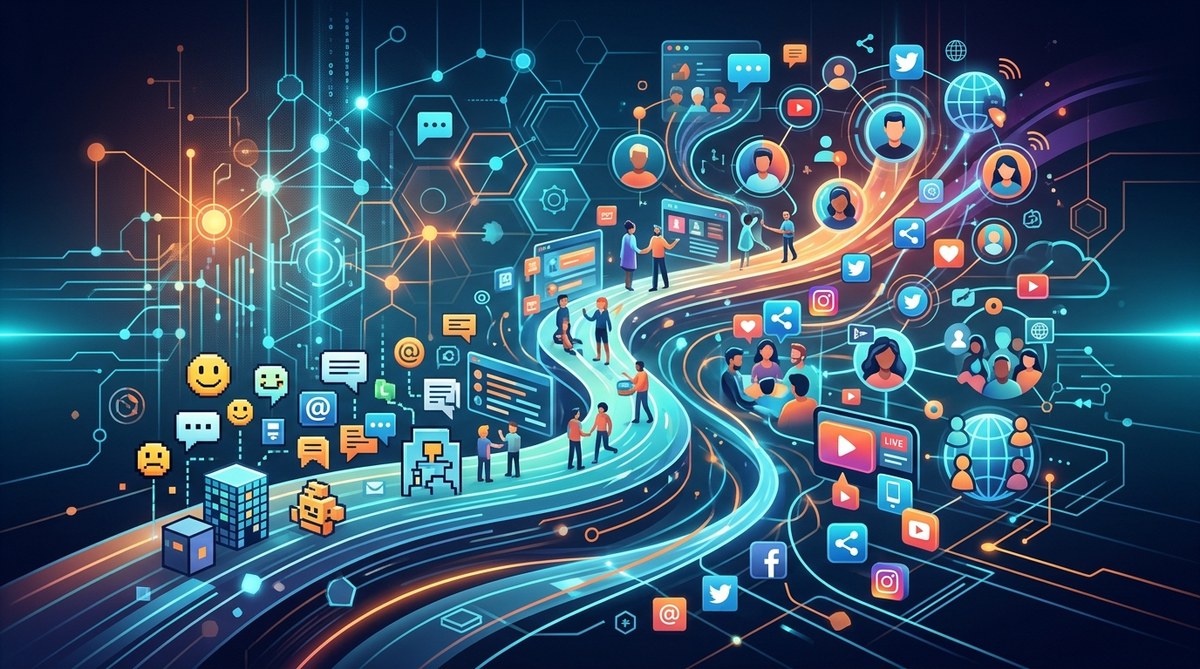
Digital communities have transformed how humans connect, communicate, and create shared identities. From early bulletin boards to today’s social media giants, the evolution of digital culture in online communities reflects a fascinating journey of innovation, adaptation, and social change. Understanding this trajectory helps researchers, students, and academics grasp how digital interactions influence societal norms, individual identities, and collective behaviors in the modern era.
The evolution of digital culture in online communities showcases a dynamic shift from simple communication tools to complex social ecosystems. This transformation influences how people form identities, share information, and build communities, shaping the future of digital interaction and societal norms.
Tracing the roots of digital community culture
The story of digital cultural evolution begins with basic online forums and message boards in the late 20th century. These platforms allowed users to exchange ideas, share interests, and form early online groups. As technology advanced, so did the ways users interacted. The rise of social media platforms like MySpace, Facebook, and Twitter marked significant milestones. They introduced features that fostered identity creation, sharing, and real-time communication.
In these early days, online communities were often niche and interest-based. They provided spaces for marginalized groups, hobbyists, and advocates to connect beyond geographic boundaries. Over time, these communities became more sophisticated, integrating multimedia content, live chats, and user-generated content. This shift laid the foundation for the vibrant, multifaceted digital cultures we see today.
The shift toward participatory and user-generated culture
Digital culture has increasingly become participatory. Users are no longer just consumers but creators. Platforms like YouTube, TikTok, and Reddit exemplify this shift. People produce memes, videos, podcasts, and blogs that shape online discourse. This movement democratizes content creation, allowing diverse voices to influence digital culture.
Participation also fosters a sense of belonging. Online communities now often revolve around shared identities, causes, or interests. For example, fandom groups create elaborate fanfiction, memes, and art, reinforcing group bonds while influencing mainstream media. This participatory culture changes how people define community and community norms.
How online communities shape digital identities
One of the most profound impacts of digital cultural evolution is on identity formation. Online communities provide spaces for individuals to experiment with different facets of their personalities. Anonymity or pseudonymity allows people to explore interests or opinions they might hide offline.
Social media profiles, avatars, and usernames become extensions of self, shaping perceptions and interactions. Online communities often develop their own norms, slang, and symbols, creating unique subcultures. These digital identities can influence offline behaviors and perceptions, blurring the lines between virtual and real-world identities.
Trends driving digital cultural change
Several key trends have accelerated digital cultural shifts:
- Mobile connectivity: Smartphones enable constant access to online communities, fostering immediacy and spontaneity.
- Multimedia integration: Videos, images, and live streams make interactions more engaging and expressive.
- Algorithm-driven content: Personalization and recommendation algorithms influence what content users see, shaping community discussions and cultural trends.
- Memetic evolution: Memes serve as a fast, flexible way to communicate ideas, humor, and social commentary, often spreading virally across platforms.
- Online activism: Digital communities mobilize around social issues, influencing real-world change and expanding the scope of digital culture.
Techniques that have shaped digital cultural shifts
| Technique | What It Does | Common Mistakes |
|---|---|---|
| User-generated content | Empowers participation and diversity | Over-saturation dilutes quality |
| Algorithmic curation | Personalizes user experience | Reinforces echo chambers |
| Memetics | Rapid idea transmission | Misinterpretation or misuse of memes |
| Real-time communication | Fosters immediacy | Overwhelms users with information |
| Community moderation | Maintains norms | Excessive censorship or bias |
“Understanding how digital culture evolves requires examining not only technological shifts but also how communities adapt and redefine social norms online,” advises Dr. Lisa Chen, a digital media researcher. Her insight highlights the importance of both technological and social factors in shaping digital communities.
Practical steps to analyze and participate in digital cultural shifts
- Observe emerging trends: Follow popular platforms and communities to identify new cultural expressions.
- Engage authentically: Participate in conversations with respect and curiosity, contributing positively.
- Create content mindfully: Share original work that reflects your interests while respecting community norms.
- Critically evaluate content: Recognize biases, misinformation, and the influence of algorithms.
- Support diverse voices: Amplify marginalized perspectives to foster inclusive digital cultures.
- Stay informed: Keep up with research and trends in digital media to understand ongoing shifts.
Techniques for healthy online engagement and common pitfalls
- Be aware of echo chambers and actively seek diverse viewpoints.
- Avoid oversharing or impulsive posting that could harm your digital reputation.
- Respect community guidelines to foster trust and safety.
- Recognize the influence of algorithms and seek varied content sources.
- Practice digital empathy to build meaningful connections.
A glance at common mistakes in digital cultural participation
| Technique | Mistake | Impact |
|---|---|---|
| Sharing unverified info | Spreading misinformation | Erodes trust |
| Ignoring community norms | Being offensive or disruptive | Alienates others |
| Over-relying on algorithms | Creating filter bubbles | Limits perspective |
| Excessive self-promotion | Appearing insincere | Reduces engagement |
| Neglecting digital self-care | Burnout or anxiety | Affects well-being |
How digital communities influence societal change
Digital communities now play critical roles in shaping societal values. Movements like Black Lives Matter, climate activism, and political campaigns leverage online spaces for mobilization. These communities foster collective identities, amplify voices, and challenge traditional power structures.
Online communities also influence cultural norms. Memes, viral videos, and social media trends often reflect or challenge societal values. They can reinforce stereotypes or challenge stereotypes, depending on how they are used. As digital culture continues to evolve, it shapes how societies define progress, justice, and community.
Looking ahead: the future of digital culture in communities
The trajectory of digital cultural evolution points toward even greater integration of artificial intelligence, virtual reality, and augmented reality. These technologies could create immersive online communities that blur physical and digital boundaries.
As digital culture continues to evolve, inclusivity and authenticity will become more critical. Platforms might develop tools to foster genuine interactions and diverse representations. Meanwhile, understanding how digital culture influences offline behaviors remains essential for researchers and educators alike.
Final thoughts on the digital cultural journey
The evolution of digital culture in online communities shows a landscape marked by innovation and social reshaping. Recognizing these shifts helps us better understand the digital environment we inhabit. As individuals, we can actively shape this culture through participation, creation, and critical engagement.
By fostering inclusive, respectful, and authentic online spaces, we contribute to a digital culture that benefits everyone. Staying aware of ongoing trends and challenges ensures we navigate this digital age thoughtfully and responsibly.
Embracing the ongoing digital cultural transformation
The future of online communities hinges on our collective ability to adapt and shape digital culture consciously. Whether through participation or observation, each of us plays a role in the ongoing story. By applying these insights, you can engage more meaningfully and help foster a vibrant, inclusive digital world.
This overview offers a comprehensive look at how digital culture has evolved within online communities. Staying informed and active can help you better navigate and contribute to this constantly changing landscape. Remember, your digital actions influence the broader cultural fabric—be intentional, respectful, and curious as you participate in this ongoing evolution.